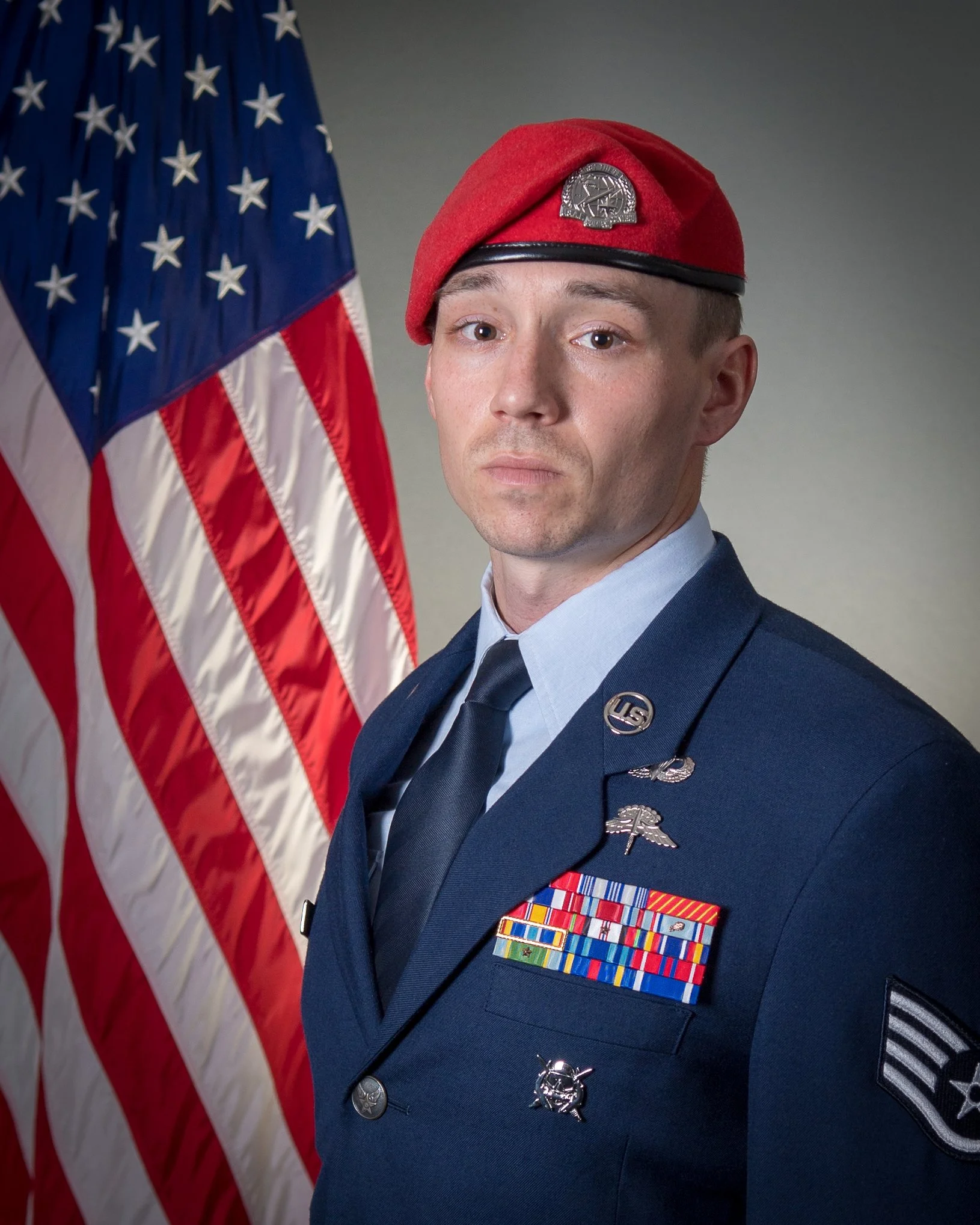
SSgt Aaron J. Cahill
1994-2024
United States Air Force Special Warfare
Combat Controller (CCT)
Bronze Star Medal Recipient

“I’m not doing this for me. My outcome is inevitable. But I want to change things for the guys coming through behind me so they aren’t treated like I was.”
— SSgt Aaron J. Cahill

Aaron’s Story

Every service member has a story that extends far beyond the uniform.

Aaron Joseph Cahill was a son, husband, father, brother, friend, and United States Air Force Special Warfare Combat Controller. He answered a calling to serve his country with courage and distinction, completing one of the military’s most demanding special operations training pipelines and serving with the United States Air Force Special Forces community.

During his eleven years of military service, Aaron deployed three times to the Middle East in support of combat operations. His dedication, professionalism, and courage earned him the Bronze Star Medal for Meritorious Achievement, a testament to the commitment he demonstrated both to his mission and to those who served beside him.

Beyond the uniform, Aaron was a devoted husband, a proud father who cherished every moment with his daughter, a loving son and brother, and a loyal friend. He loved fishing, cooking, working out, and spending time with people he loved. His quick wit, infectious laugh, and willingness to help others left a lasting impression on everyone who knew him.

Like many combat veterans, Aaron also carried invisible wounds. He struggled with the effects of combat-related trauma, traumatic brain injury (TBI), depression, and alcohol misuse while continuing to serve. Although he repeatedly sought help, he believed the care he needed was often delayed or difficult to access.

In one of his final conversations with his mother, Aaron shared that he was preparing recommendations for the Inspector General - not for himself, but for the service members who would come after him. He wanted to improve the military’s response to those experiencing mental health crises so that others would not face the same barriers he encountered.

His words continue to guide the mission of Aaron’s Wish:

“I’m not doing this for me. My outcome is inevitable. But I want to change things for the guys coming through behind me so they aren’t treated like I was.”

Aaron’s story is one of courage, sacrifice, love, and purpose. While his life ended far too soon, his legacy lives on through Aaron’s Wish, which is dedicated to improving military mental health, supporting service members and their families, and advocating for meaningful change so that no one seeking help is left behind.

The Beginning of His Mental Health Journey

Aaron’s military career was defined by courage, discipline, and an unwavering commitment to his teammates. Like many who serve in combat, however, the experiences that shaped him as a warrior also carried invisible costs.

Following multiple combat deployments, Aaron began experiencing the effects of PTSD and TBI. Rather than hiding his struggles, he made the courageous decision to seek help - a decision that reflects strength, not weakness.

In November 2022, Aaron began Magnetic Resonance Therapy (MRT) for PTSD and TBI. It marked the beginning of his determined effort to heal while continuing to serve the country he loved.

Aaron believed that asking for help should never jeopardize a service member’s career or dignity. Instead, he hoped that seeking care would allow him to recover, continue serving, and remain an effective member of his team.

When Asking for Help Became More Difficult

As Aaron continued treatment, navigating care while remaining in an operational military environment became increasingly difficult. He wanted to heal, continue serving, and remain part of the team he had devoted himself to.

During this period, Aaron shared with his family that he felt discouraged after being publicly criticized for occupying a position within the 24th Special Tactics Squadron while seeking treatment. Rather than weakening his resolve, the experience strengthened his determination to continue pursuing the care he believed he needed.

A System He Believed Could Be Better

Over the following two years, Aaron faced a series of personal, medical, and administrative challenges while continuing to seek treatment. He participated in recommended programs, searched for additional resources on his own, and repeatedly advocated for more comprehensive mental health care, including residential treatment.

As his struggles continued, Aaron became convinced that the military’s response to service members experiencing combat-related mental health injuries could be improved.

A Legacy of Change

In the months before his death, Aaron told his mother he was documenting his experiences and developing recommendations for the Inspector General. He believed meaningful change could help protect future service members facing similar challenges.

Aaron’s story did not end with his service. It became the beginning of a mission to improve military mental health so that future service members receive the care, dignity, and support they deserve. That mission became Aaron’s Wish.